
What Is On-Page SEO?
On-page SEO, also known as on-site SEO, involves optimizing the content and structure of individual web pages to improve their ranking on search engines like Google. This process is crucial for driving organic traffic and enhancing user experience.
Key on-page SEO tasks include aligning content with search intent, optimizing title tags, improving URL structure, and integrating internal links to increase page authority.
In this article, we’ll explore effective strategies to optimize various on-page factors that directly influence search engine performance.
But first, let’s understand how on-page SEO differs from off-page SEO, and why both are essential for a successful SEO strategy.
On-Page SEO vs. Off-Page SEO
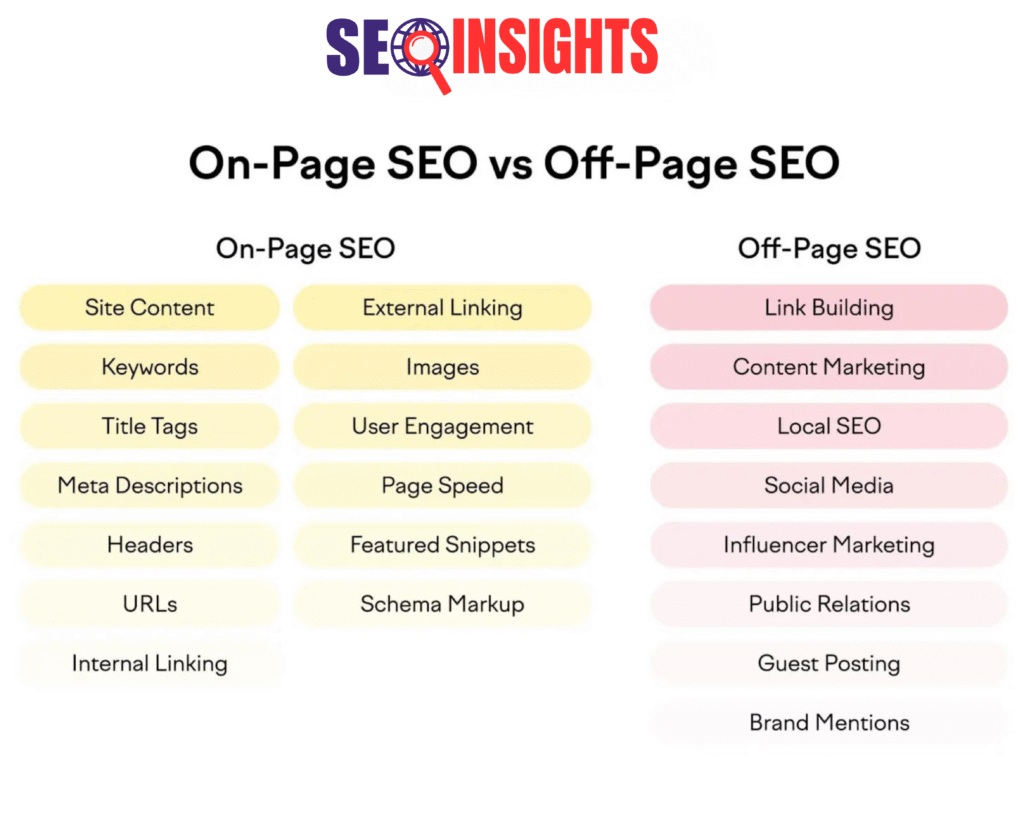
On-Page SEO refers to the optimization techniques implemented directly on your website to improve its ranking on search engines. Key on-page factors include keyword optimization, meta tags, title tags, URL structure, internal linking, and content quality. These elements help search engines understand your content and relevance to user queries, which ultimately enhances your search engine rankings. The primary goal of on-page SEO is to ensure that the content is optimized for both search intent and user experience, boosting organic traffic and engagement.
On the other hand, Off-Page SEO involves actions taken outside your website to improve its visibility and authority. This includes backlink building, social media engagement, and brand mentions across various platforms. Backlinks from authoritative websites signal to search engines that your content is valuable, improving your domain authority and overall rankings. Off-page SEO plays a crucial role in establishing credibility, trust, and relevance, which are essential factors for ranking higher on Google.
In short, on-page SEO focuses on optimizing elements directly on your website, while off-page SEO works to enhance your site’s authority and credibility externally. Both are necessary for a well-rounded SEO strategy and achieving long-term success.
Why Is On-Page SEO Important?
On-Page SEO is a critical component of any successful SEO strategy because it directly impacts how search engines understand and rank your website. By optimizing your content, title tags, meta descriptions, URL structure, and internal links, you make it easier for search engines to crawl and index your pages. This, in turn, increases the chances of ranking higher in search results for relevant keywords and search intent.
On-page SEO also enhances user experience by ensuring that your website is user-friendly, fast-loading, and mobile-responsive. These factors not only improve rankings but also encourage visitors to stay longer, reducing bounce rates and improving engagement. High-quality, optimized content tailored to user needs increases the likelihood of conversions and boosts organic traffic.
Furthermore, on-page optimization helps improve the relevance and authority of your content, ensuring that it aligns with both user expectations and search engine algorithms. It’s the foundation for building a site that not only ranks well but also provides value to its audience. Without effective on-page SEO, your website might struggle to gain visibility and lose potential traffic to better-optimized competitors.
In short, on-page SEO is essential for ranking higher in search results, driving organic traffic, and improving user experience.
9 Tips for Improving Local On-Page SEO
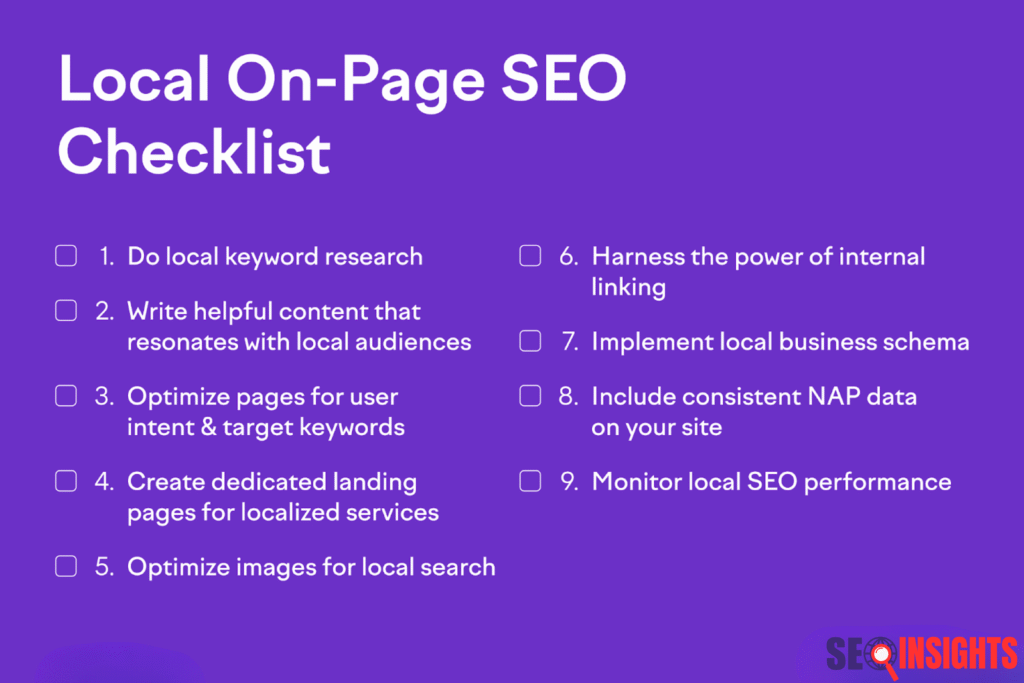
Improving your local SEO can significantly increase visibility for businesses targeting customers in a specific location. To enhance your local on-page SEO, here are 9 essential tips you can implement:
1. Do Local Keyword Research
Use tools like Semrush’s Keyword Magic Tool to discover relevant local keywords. For example, if you’re a plumber in Miami, search for terms like “plumber Miami” to find keywords related to your business and location. Focus on low-volume, easy-to-rank keywords initially and progressively target higher-volume keywords as your website gains authority.
2. Write Helpful Content for Local Audiences
Create content that resonates with your local audience by addressing their needs and providing solutions to local issues. Focus on writing articles that highlight your expertise in the area, and ensure your content is clear, original, and answers the specific questions local users might have.
3. Optimize Pages for User Intent and Keywords
Incorporate local keywords in important areas like URLs, meta descriptions, headings, and within the first paragraph of your content. Make sure the content aligns with the search intent of users in your location, whether informational, transactional, or navigational.
4. Create Dedicated Landing Pages for Localized Services
For multi-location businesses, creating dedicated landing pages for each location can help rank for specific local search terms. For example, a plumbing business could create separate pages for “new construction plumbing in Miami” or “emergency plumbing Miami.”
5. Optimize Images for Local Search
Optimize your website’s images by adding descriptive alt text with location-based keywords. This helps search engines understand what your images represent, making them more likely to appear in image search results.
6. Harness the Power of Internal Linking
Use internal links to guide users to related content on your website and help search engines understand the structure of your site. For example, linking to a specific location page from your service offerings can boost relevance for that region.
7. Implement Local Business Schema
Adding schema markup to your site helps search engines understand your business location and services. Use Local Business schema to highlight important details like your address, phone number, business hours, and customer reviews.
8. Ensure Consistent NAP Data
Ensure your NAP (Name, Address, Phone number) is consistent across all pages of your website, especially in your header, footer, and contact page. This is crucial for local SEO and will help ensure accurate listings across online directories like Google My Business and Yelp.
9. Monitor Local SEO Performance
Use tools like Semrush’s Position Tracking to monitor your rankings for local search queries. This helps you identify which pages are performing well and which need optimization. Track your map pack performance and receive weekly updates on your local rankings.
By following these 9 tips, you’ll be able to improve your local SEO and drive targeted traffic to your website. These strategies focus on optimizing your site for local search, improving user experience, and increasing your visibility in your geographic area, ultimately attracting more customers and boosting conversions.